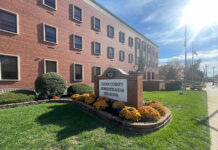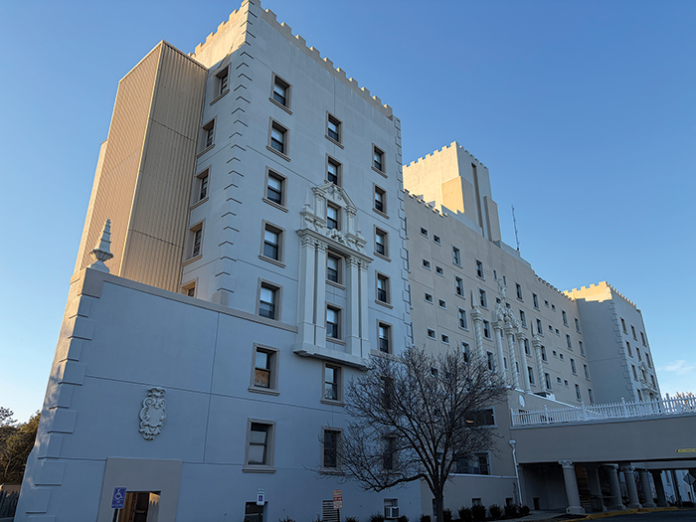
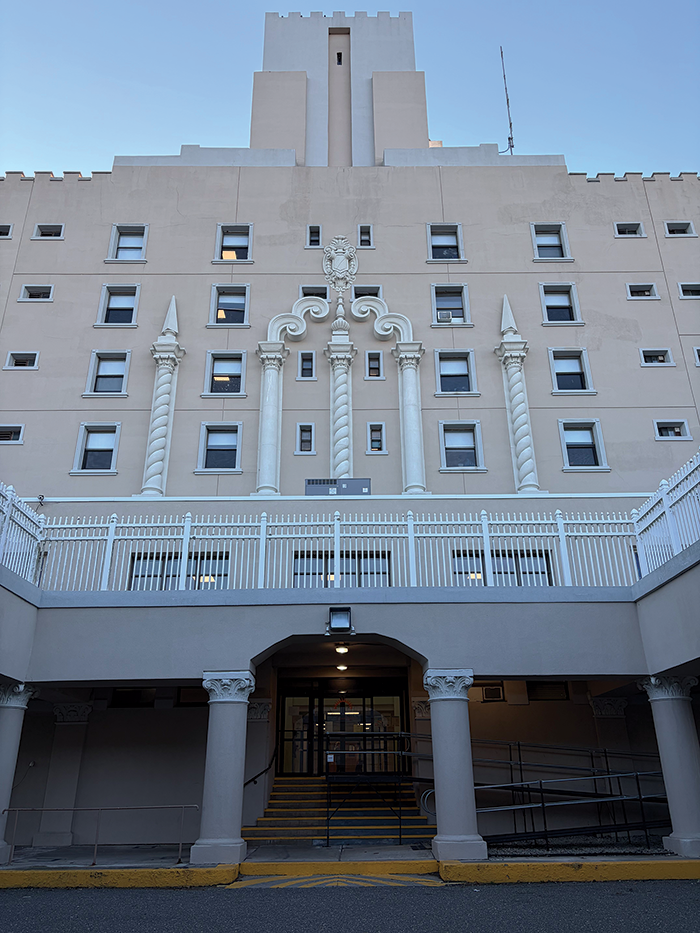
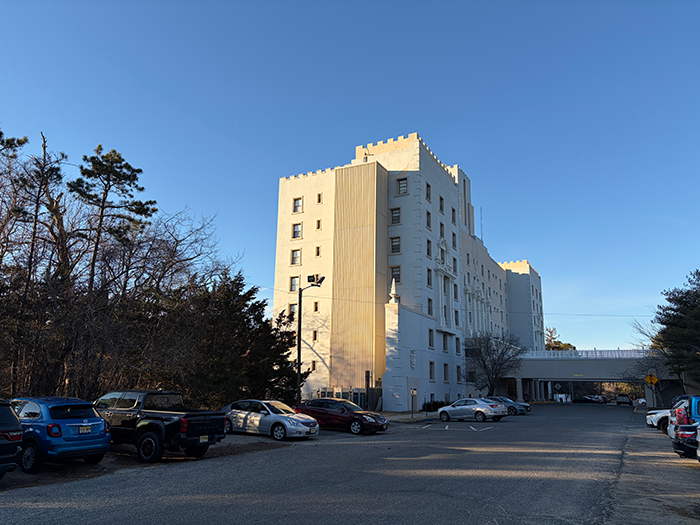
BERKELEY – When you’re driving east from Central Regional down Veterans Boulevard, a stately nine-story white building peeks up over the trees. Non-locals coming off the Parkway might wonder “What is that?” Locals know what it is – but perhaps they don’t know the real story.
The Berkeley Times sat down with Berkeley Township Historical Society President Gerry Morey and Kelly Lerche, Director of Admissions, Crystal Lake Rehabilitation and Healthcare Center, to discuss the present – and future – of a building with a lot of past.
Al Capone never had anything to do with the building, but that doesn’t mean there aren’t good stories attached to it.
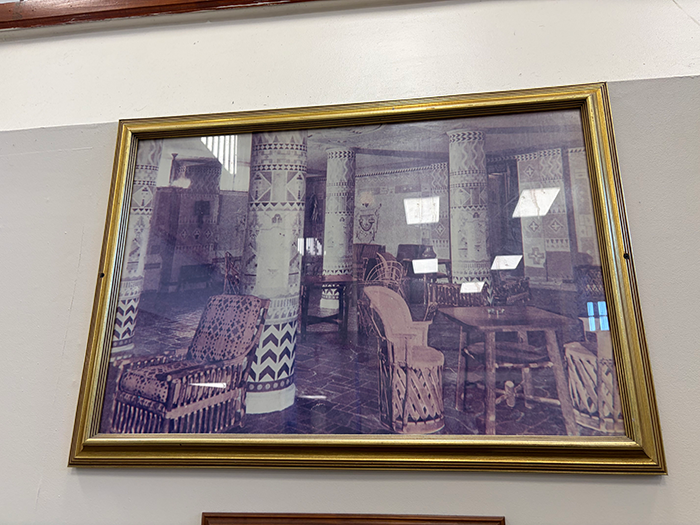
The building recently celebrated its 95th anniversary. As many locals know, it was originally called the Royal Pines Hotel. Real estate developer B.W. Sangor began the $1.5 million construction in 1928. He wanted it to be the focal point of a 24 square mile resort community in the pines, known as “Pinewald.” Designed by world renowned Russian architect W. K. Oltar-Jevsky, the Royal Pines Hotel opened its doors to its wealthy clientele on November 18, 1930. The lobby itself cost $32,000 to build and decorate.
When it was built, the only other waterfront competition would have been Asbury Park or Atlantic City, both a lot more difficult to get to nearly a century ago.
An ad welcoming people to the “recreational city” of Pinewald advertises a community garage, a pavilion on the Barnegat Bay, and something called “Flirtation Walk” on Central Boulevard.
A publicity brochure begged the question: “Perhaps you have not yet thought of that little bungalow-by-the-sea? But why not? It will come as easily and as naturally as the car, the radio, the piano, or the vacuum sweeper!”
In 1928 a song called “Come To Pinewald” proclaimed:
“Close your eyes and take a trip with me,
To a place called Pinewald by the sea.”
This was written by J. Fred Coots, the legendary Jazz musician who also wrote the music for “Santa Claus Is Coming To Town.”
“To get a sense of how much property was part of this resort project, the area where Veterans Park and Central Regional are now, was an 18-hole golf course,” Morey said. “Tennis courts were adjacent to where the Forest Hills soccer field is now, and the soccer field was a huge baseball stadium with bleachers and stone steps to access the field on its west side. Most likely the home field for the Pinewald and Double-Trouble Baseball teams.”
The historical society has been diligently searching for and collecting items from the hotel days. To date, they have found priceless items emblazoned with the Royal Pines Hotel logo, such as plates, dishes, silver milk servers, and coat hangers. Through the courtesy of Crystal Lake Healthcare and several locals, the museum also has a few of the solid brass doorknobs, which are all engraved with the RPH initials.
And while it makes a good story, “Al Capone had nothing to do with the hotel. He was already in prison at the time,” Morey said. “This has been fully documented by a well-respected local historian.”
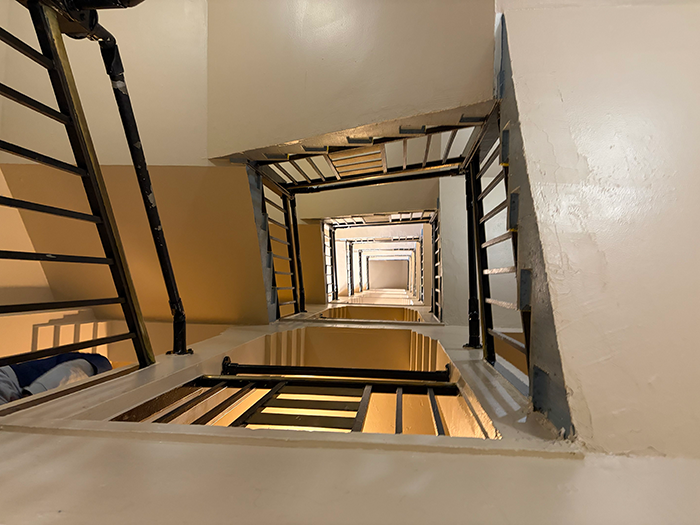
He added, “The rumors of tunnels under the hotel are true. They were service tunnels, used so that food and linens could be brought from the kitchens in the basement of the hotel, without visitors seeing it, to the Villa Miramar, the restaurant that overlooked the lake. However, there are no tunnels running beneath the pines for gangsters distributing liquor during Prohibition, nor are there tunnels leading to a trap door under the lake. Laws of Physics folks; that’s nothing more than a local legend.”
The hotel advertised boat landings and sundecks. Under a section of a brochure called “Sports And Future Sports,” it lets people know that golf, tennis, polo, and motoring are among the activities buyers can expect now or after facilities are built. It said that 6,000 families had already bought property.
It was the centerpiece of a planned city, which included several inns and stores. There were different neighborhoods planned, like one for those serving in the military. The “Sangor Special” railroad was advertised to run every Sunday from Jersey City to Pinewald. There were also buses heading that day to Pinewald from Philadelphia and Trenton. Guests were given lunch, shown the Pinewald movie, and given a high-pressure sales pitch to buy property.
Much of the advertising language also encourages people to buy property because the value is going up. Real estate is an investment, and property values will only go up in Ocean County – something modern residents know all too well.
Sangor sent out a letter to the “Pinewalders” offering a chance to name the hotel. The winner of the chosen name would receive $200 in gold. It is unknown who won, but if they held onto the gold it would be worth $47,982 today.
“We found dishes from a local garbage dig made for the Steven’s Hotel in Chicago and we believe that hotel may have had a connection to the Royal Pines, if you see pictures, the hotels are quite similar. No one in Chicago has answered our inquiries.” Morey said.
Ultimately, the federal government came knocking about unpaid income taxes, likely attached to a purported $11 million in land sales. There were also claims that the same lot was sold to different people, or that lot buyers were paying taxes on lots they didn’t own.
Sangor declared bankruptcy after only 18 months of the hotel being open. Thomas A. Mathis (one of the bridges to Seaside is named after him) became receiver of the hotel. A Pennsylvania school looked into buying it. Mathis tried selling it to a New York company. He briefly leased it to a Maine hotel owner, who could not turn a profit.
In 1938, Sangor and his business partner at the Toms River Trust Company were jailed for embezzlement. The rest of Sangor’s life is full of colorful stories, but perhaps for a different article.
Meanwhile, life in Pinewald went on. The residents had a property owners association. Former governors Asmus and Hoffman had properties here.
A periodical called “Pinewald Life” detailed the goings-on, including development of streets that are still around today, such as Serpentine Drive. It includes bus and train schedules.
One interesting item, in August of 1938, noted “There is no building code in Berkeley Township but we hope that the Township Committee will give consideration to the proposal that one be adopted. This is, we think, necessary in order to protect property owners building nice homes against depreciation in the value thereof by the erection of ‘Jerry built’ shakes on adjoining property.” It then describes that an ordinance was passed requiring builders to submit plans for new buildings to the town.
Hotel To Hospital
Over the years, the hotel changed hands a few times. Once it became a hospital, it remained one for decades.
In 1932, the $1.5 million hotel was sold for $21,000 at auction to a New York man.
A Royal Pines menu dated April 30, 1933 include (misspellings kept as a window into the past) appetizers of cherrystone clams, sourkraut juice, smoked salmon, herring in tomato sauce, and tomato juice cocktail. Soup was consomme en tasse or potage creme printanniere. Entries were roast leg of spring lamb with mint jelly, broiled sirloin steak, or half boiled spring chicken. Wax beans or green peas were offered as vegetables. Potatoes were either baked, French fried or boiled. Salad was lettuce and tomatoes with French, Russian or mayonnaise dressing. The cheese portion of the meal offered American, Swiss, cream, saltines and crackers. For dessert, there was mixed ice cream, Boston cream pie, vanilla eclairs, and assorted cookies. Coffee, tea or demi tasse were available.
Morey also reported that, “in the mid-1930s, boxer Jack Dempsey was in negotiations to purchase the hotel and lake property, planning to turn the perfectly sized lake into a horse-racing track.” The deal fell through because the much-anticipated legalized horse betting in New Jersey did not become legal until 1939. Lou Gehrig and Babe Ruth visited, but there is no documentation to support that they were guests at the Royal Pines.
In 1935, the new owner was Dr. Edward Hazard, who also owned a small hospital in Long Branch. He was the first one to operate it as a hospital.
When the Hindenburg crashed in Lakehurst in 1937, four patients were brought to the hospital.
“It was only natural they be brought there,” said Morey, “as many of the nurses spoke German.”
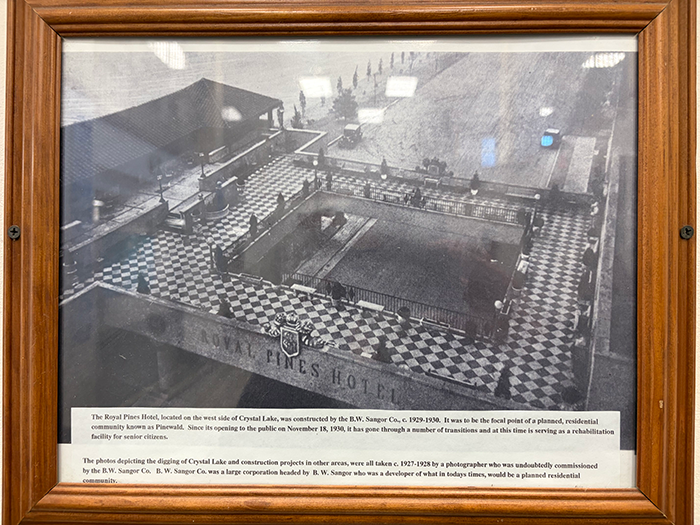
In 1947, Dr. Joseph L. Dennis of Philadelphia bought it. He changed the name from Royal Pines hospital to Dennis Memorial Hospital, in honor of his late father.
Paperwork during this era describes “The Dennis” as follows: “On the picturesque pine coast fronting the sea and in a region famed for its smart resorts, it is easily accessible from New York, Philadelphia and Atlantic City, which are but one hour away. It is reached by what are undoubtedly the finest motor highways in America.”
A promotional book notes that the property is 210 acres. Rates were $5, $7, $9, or $12 per day. It does mention that there are tunnels that lead to the Solarium or Pavilion House so people can get there in inclement weather.
“The first floor of this pavilion house is another recreation room – the second floor is the movie solarium.”
This was in the day when breathing the pine air and sea air was to do wonders for your health. They might have been on to something, since going outside is perhaps better than sitting inside looking at screens all day.
“Although many come for the rest cure, fresh air and good food, others come for the three month intensive rehabilitation program. The Sanitarium has a special section for spastics, hemiplegics, polio, arthritics, and paralytics, where every effort is made to retrain the patient to make them self sufficient.”
There’s a note that people with skin cancer are provided certain protection if they are lounging on the sundecks.
“In addition to the 400 sanitarium beds, there is a fully equipped modern 50 bed Dennis Hospital. Besides the hospital maternity section, a special secluded maternity department is maintained. Here unmarried mothers can be assured of complete seclusion. The rates are very reasonable – Work given to certain cases to reduce expenses.”
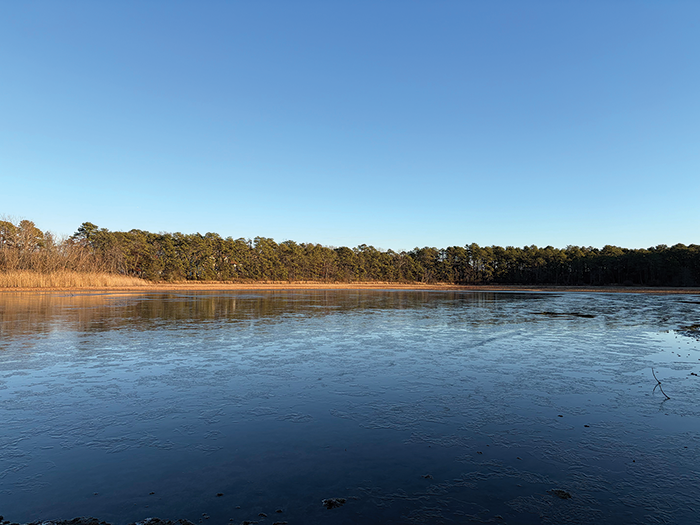
It was advertised that the 20-acre lake was fed by artesian wells and stocked by game wardens. Chickens, pigs and ducks were raised on the premises. There were plans for a dairy and farm.
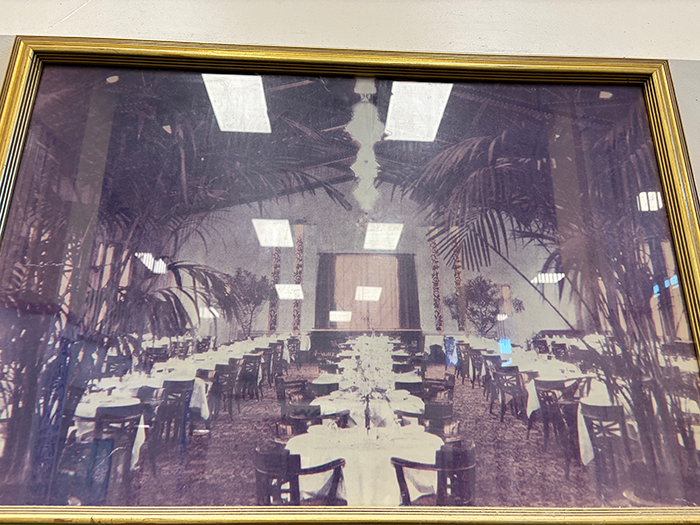
The recreation hall was for dancing and games. There was a barber shop and a beauty parlor, while a Turkish bath was planned to open in 1949.
Where else could one go that had shuffleboard, ping pong, and an x-ray machine?
In 1950, Dr. Abe Kraig and his associates, from New York, turned it into Pinehaven Nursing Home and Sanitarium. .
A newspaper article from the Pinehaven period notes the variety of patients. It also describes how many staff were “escapees from Communist tyranny. Working in a storeroom is a former judge of a communist over-run country. In his spare time, this gentleman writes scripts for Radio Free Europe.”
Dr. Joseph O. Smigel worked there with Kraig. Kraig was the administrator when he was accused of not paying staff salaries. Some employees at one point tried to force him not to leave until he paid them.
Old articles state that the Pinehaven Nursing Home sued the federal government for $200,000. Kraig alleged that a patient would be brought in and later staff would learn the patient only qualified for a few days of Medicare. They were represented in court by Robert J. Novins, the Toms River lawyer that the Ocean County College planetarium is named after.
The American Orthodox Catholic Church was under contract to buy the building in the late 60s, however Kraig was dragging his feet. Church representatives thought he might have found a better buyer.
Ultimately, it was sold to Seabrook Center, Inc.
In the 1970s, the name changed to Bayview Nursing home and then Bayview Convalescent Center.
It has been Crystal Lake Healthcare and Rehabilitation since 1999.
The Crystal Era
Kelly Lerche, Director of Admissions for Crystal Lake, said there are currently six floors of residents with 17 rooms on each. It now serves as a 235 bed long-term care facility.
“Thanks to our wonderful activities team, there is always something to look forward to, creating a lively and joyful atmosphere where residents can socialize, laugh and stay engaged,” Lerche said.
There’s special events, holidays, parties, and more, she said. The facility sponsors township events, like the summer concerts at Veterans Park, so the staff try to take some folks there.
A “Death of a Gangster Murder Mystery,” which was open to the public at no charge was sold-out and the attendees had a fabulous time. Almost everyone attended in their Roaring 20s garb, which was very apropos, considering the history of the building.
Also, since 2020, Crystal Lake has been an ardent supporter of the Berkeley Township Historical Society, providing valuable artifacts, lunch for volunteers at the museum on workdays and more recently making sure the “train crew” is hydrated and fed.
The historical society brought home Engine #2173, which had dug the lake in front of the hotel in 1926. Crystal Lake staff and residents were included in the parade and came out to greet the locomotive as it came around the lake. BTHS is very grateful and appreciative of the partnership they have formed with Crystal Lake.
“Crystal Lake Healthcare and Rehabilitation’s mission is to provide high-quality, patient-centered skilled nursing care and rehabilitation services to residents and patients, help them regain independence and improve their overall health and quality of life in a compassionate, supportive environment,” Lerche said.
Staff work here for a long time. She was able to make a list of 28 current employees who had worked there at least eight years. Of those, nine had worked there 30 or more years. Two of them had worked 41 or 42 years.
This kind of longevity means that the staff gets to know the residents, she said.
“Over the years, our facility has remained a meaningful place for many, including former staff members who later chose to return as part of our community,” she said.
In some cases, generations will work for Crystal Lake. Historian Josie Morey’s mother worked here when it was Pinehaven, and her sister Barbara worked here for 44 years in different departments and Barbara’s son has been working here for more than 20 years.
Information from this article comes from Crystal Lake and the extensive research of Josie and Gerry Morey with the Berkeley Township Historical Society.